Lovely Jill and the Architecture of Adults
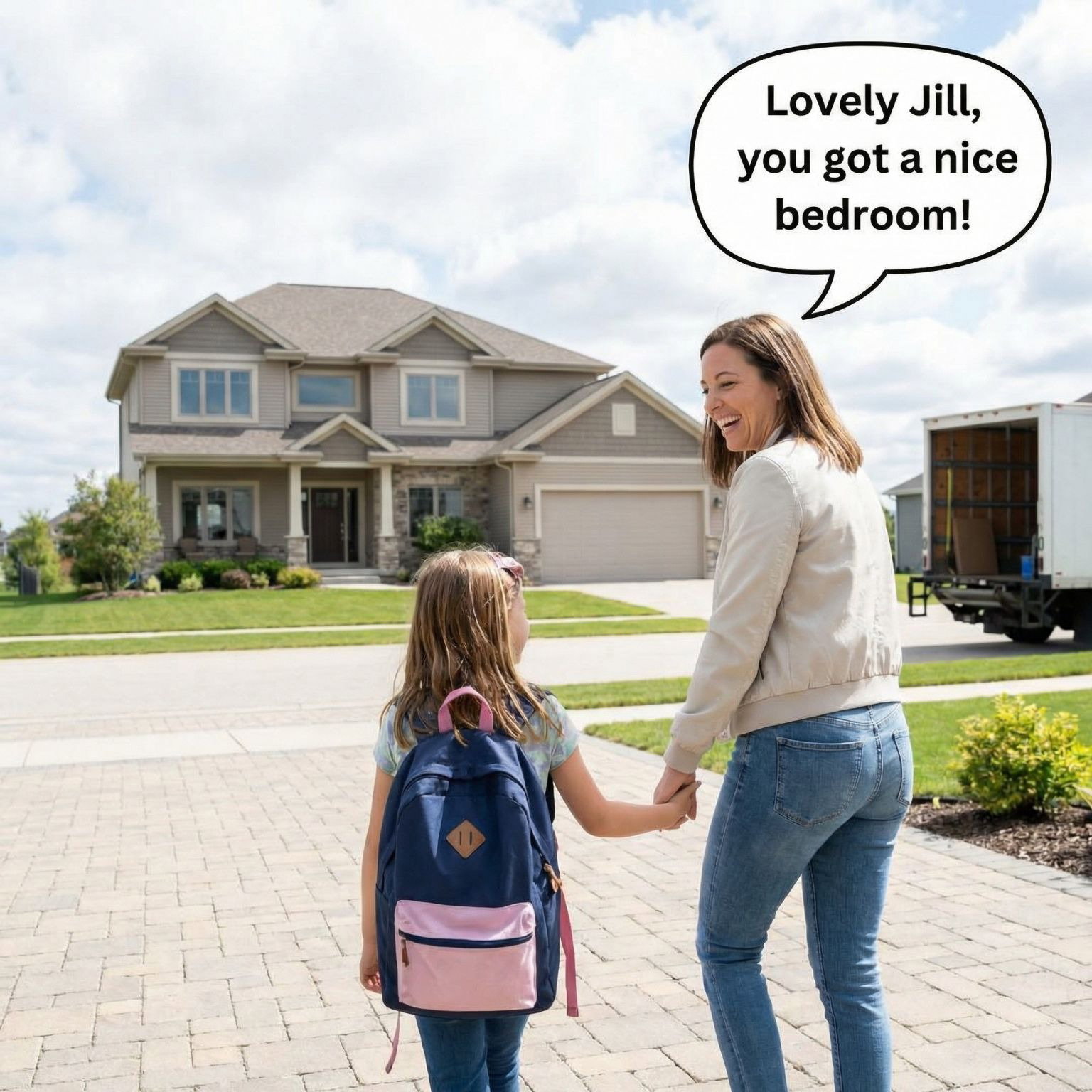
Architectural design routinely prioritizes adult needs while reducing children’s presence to decorative concerns.
This imbalance becomes clear in the common scenario of a family house designed following a list defined by the parents:
1. The clients own a 1,000 sqm plot and wish to build a two-storey private house.
2. The house shall include three bedrooms, each with an En Suite bathroom.
3. The master bedroom shall be approximately 30 sqm and include a private bathroom with a jacuzzi and a walk-in closet.
4. The two remaining bedrooms shall be approximately 20 sqm each, also with private bathrooms.
5. ONE of these BEDROOMS is for OUR LOVELY JILL. SHE is an EIGHT YEAR OLD. WE LOVE HER SO MUCH. SHE is so SWEET. SHE is so CLEVER. THEREFORE, HER ROOM NEEDS BE NICE AND VERY ATTRACTIVE. WE areTHINKING it should feature ATTRACTIVE COLORS and DECORATIVE WALL TREATMENTS.
6. The house shall include a 60 sqm family room with an open kitchen and two storage spaces.
7. A separate guest room of approximately 80 sqm is required, including a private bathroom and an independent outdoor entrance.
8. Both the family room and the master bedroom shall face a 50 sqm swimming pool.
9. The pool area shall include seating and a grilling area.
10. Outdoor spaces shall include a garden designed in a Chinese garden style. 11. The house shall also include a garage accommodating three cars, with additional storage space.
12. Material and finish preferences include white marble flooring throughout, white-painted walls, and white-gray doors.
13. The main entrance door shall be 2 meters wide and 3 meters high.
14. Additional requirements will be defined during the design process.
Within this framework, Lovely Jill appears only as an afterthought assigned a bedroom distinguished by color and wall decoration rather than spatial agency.
This approach is not accidental but structural. Children are assumed to lack the capacity to contribute meaningful architectural knowledge, and their needs are therefore interpreted and filtered by adults. As a result, children are designed for, not designed with. Their lived experience, bodily scale, and spatial practices do not inform the organization of space.
When this logic is extended to neighborhoods, streets, districts, and downtowns, the consequences multiply. Urban spaces are shaped by adult efficiency and control, while children are confined to designated, regulated zones. The issue is not the absence of child friendly features, but the exclusion of children from spatial authorship.
The question, then, is not how to add better rooms or brighter colors for children, but how to rethink architectural processes so that children are recognized as present spatial agents rather than future users.