Why do we design “one-size-fits-all” rooms for children?
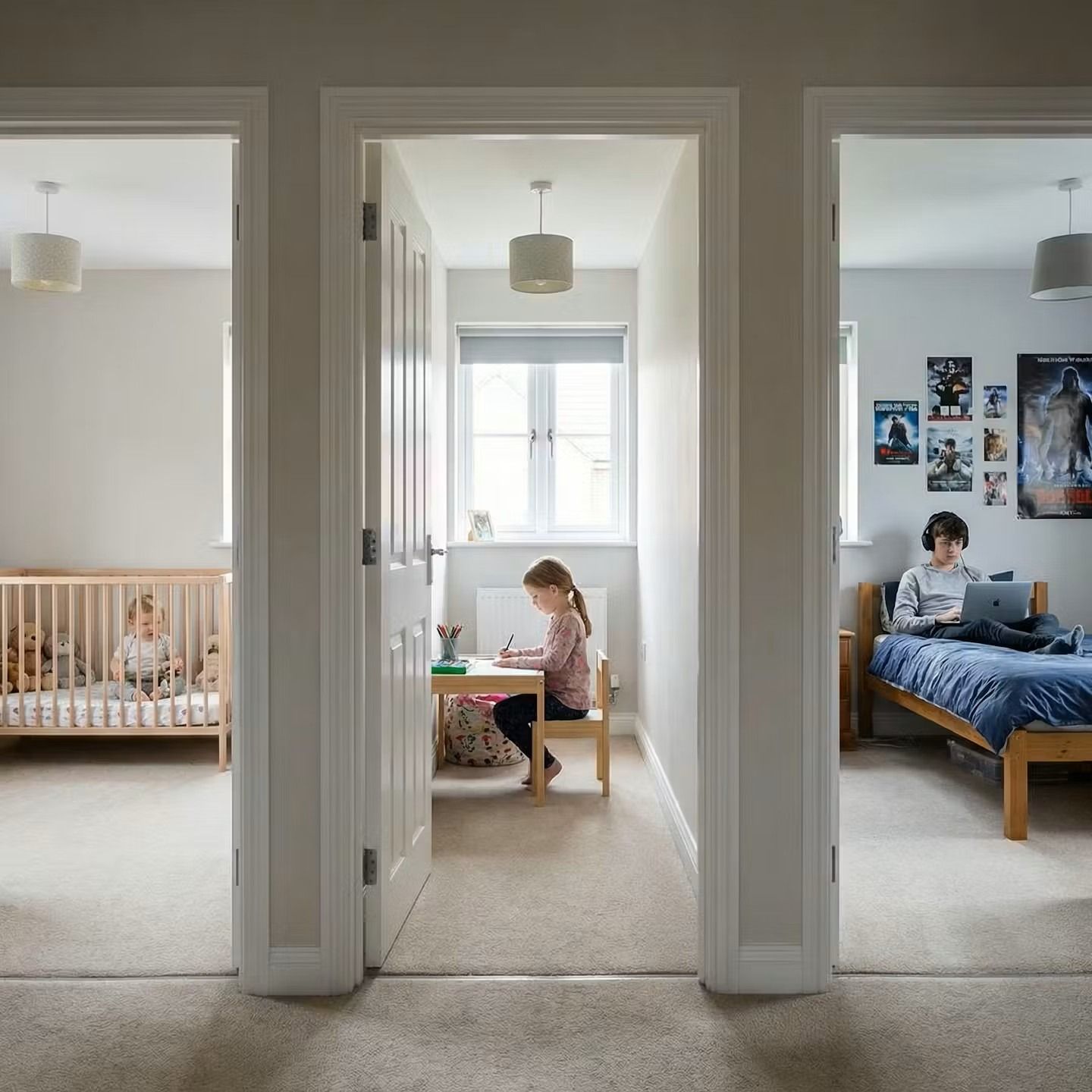
Human life begins on day one, but the first two decades are the most dynamic period of growth. During this time, both the brain and body are constantly developing. It is only around 18–20 years old that this rapid phase of change begins to stabilize.
What’s remarkable is how quickly our needs and interests evolve:A 2-year-old is not attracted to the same things as a 1-year-old.A 7-year-old doesn’t relate to the world the way a toddler does.A 16-year-old has completely different psychological, social, and spatial needs.
Yet in architecture and interior design, we often group all these stages into a single category called “children” and give them the same type of rooms, the same colors, the same furniture logic.
We love to talk about our childhood and youth with nostalgia. But no adult would truly want to go back and live as a child, think, or be treated like a child or a teenager again.
So why do our buildings still freeze childhood into one adult-based static design?
If we accept that humans are dynamic, then our spaces, especially those designed for young people, should be dynamic too.Design should have a capacity to contain children's growth, not force them to adapt to adult space principles.
This is not only a design question, but it’s also a human-centered design responsibility.