Is children’s participation in architecture enough?
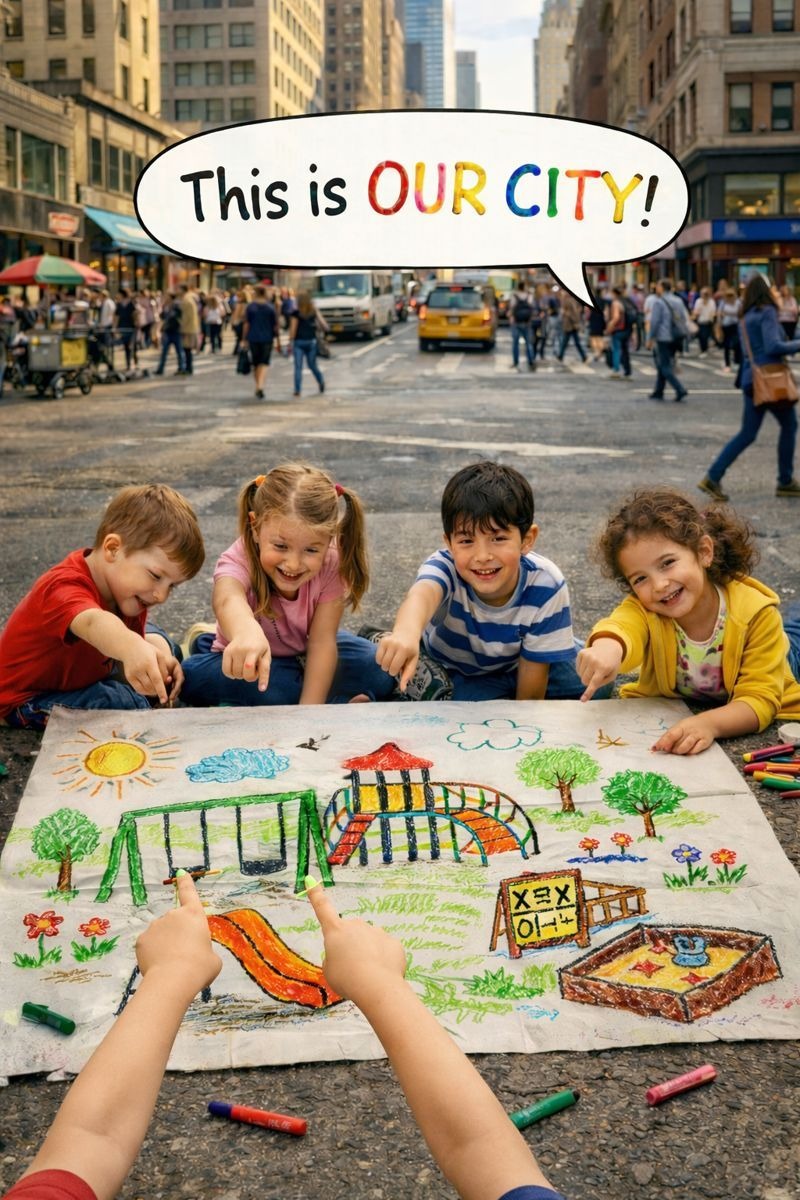
Article 12 of the United Nations Convention on the Rights of the Child (UNCRC) affirms children’s and young people’s right to participate in all matters affecting their lives, and obliges that this participation be taken seriously and carried out with respect.
In architectural practice, children’s participation is commonly understood as the direct involvement of young users in limited design types through workshops, modeling, and site visits. It aims to capture children’s perspectives on buildings and spaces and is frequently presented as evidence of inclusive and child-centered design.
However, the critical question remains: is this approach sufficient, and does it truly fulfill children’s rights?
The answer is no, because participation must be evaluated not only as a procedural activity, but also by its outcomes and its structural impact on architectural knowledge and practice.
Current methods of participation reveal several critical shortcomings:
First, children’s participation in architecture occurs in very limited geographical areas and contexts and in only a small number of projects worldwide, preventing it from becoming a standard professional or institutional practice.
Second, participation is largely restricted to a narrow range of programs primarily schools and playgrounds, limiting children’s involvement to spaces already defined as “for children” and excluding them from broader architectural and urban decisions that shape streets, housing, transportation, and public life.
Third, many participatory processes fail because the applied methods, the questions asked, and the answers collected are too limited to serve as meaningful design guidance. What architects claim to learn from these exercises is often insufficient or superficial. Asking children to define “good architecture.” without providing them with an architectural understanding is like asking Someone to draw a healthy meal without knowing what healthy food is.
Fourth, architects often extract only limited or selective insights from participatory activities. Children’s contributions are frequently filtered, reinterpreted, or adapted to fit pre-existing design intentions, yet still presented as “child-influenced.” This reduces participation to a symbolic gesture and undermines its legitimacy as a rights-based practice.
Realizing children’s rights in architecture requires a fundamentally new approach to participation that addresses all components of architecture and urban structure. It includes all age groups up to eighteen years of age and be capable of translating the full breadth of children’s architectural needs and desires into architectural thinking and practice. It demands a systemic transformation of architectural thinking, in which children’s participation operates as a rights-based mechanism that ensures children are given equal consideration with adults in shaping the city and urban development strategies.