Children’s Participation: The Dream vs. Reality
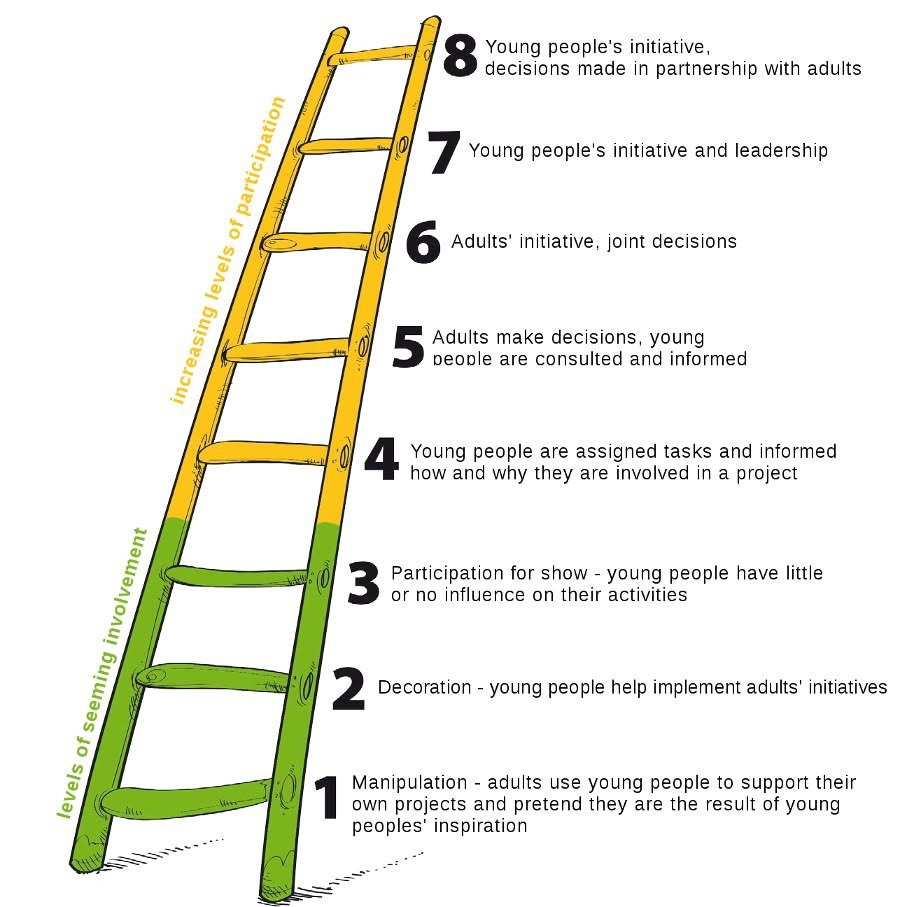
In 1992, Roger Hart introduced the Ladder of Children’s Participation for UNICEF as a guideline and idea that shaped decades of workshops and participatory methods.
Since then, countless initiatives have tried to involve children in design. Workshops, drawings, and co-creation sessions all aim to capture children’s needs and translate them into better cities.
But if we judge by results, we must ask honestly: What has truly changed?
In architecture, urban planning, and city design, the impact remains limited.
Children’s participation is often reduced to short-term workshops that produce insights but not transformation.
The problem is deeper. Children’s needs cannot be fully understood through isolated participation events.
This approach continues a long historical pattern where children are treated as temporary users, not as fundamental citizens of the city.
If we are serious about children’s rights in cities, we need a shift:
• From workshops → to systems
• From participation → to integration
• From consultation → to structural change
Children must be embedded in architectural knowledge, education, and practice across all levels of design and planning.
And the state must take responsibility by defending children’s spatial rights in every urban development strategy, public and private.
Workshops are not enough.
Designing cities for children requires a new way of thinking.
hashtag#UrbanPlanning hashtag#Architecture hashtag#ChildCity hashtag#Participation hashtag#CityDesign hashtag#UrbanDevelopment #ChildCity#ArchitecturalKnowledge#State#