Children's imagination of the city is different from that of adults.
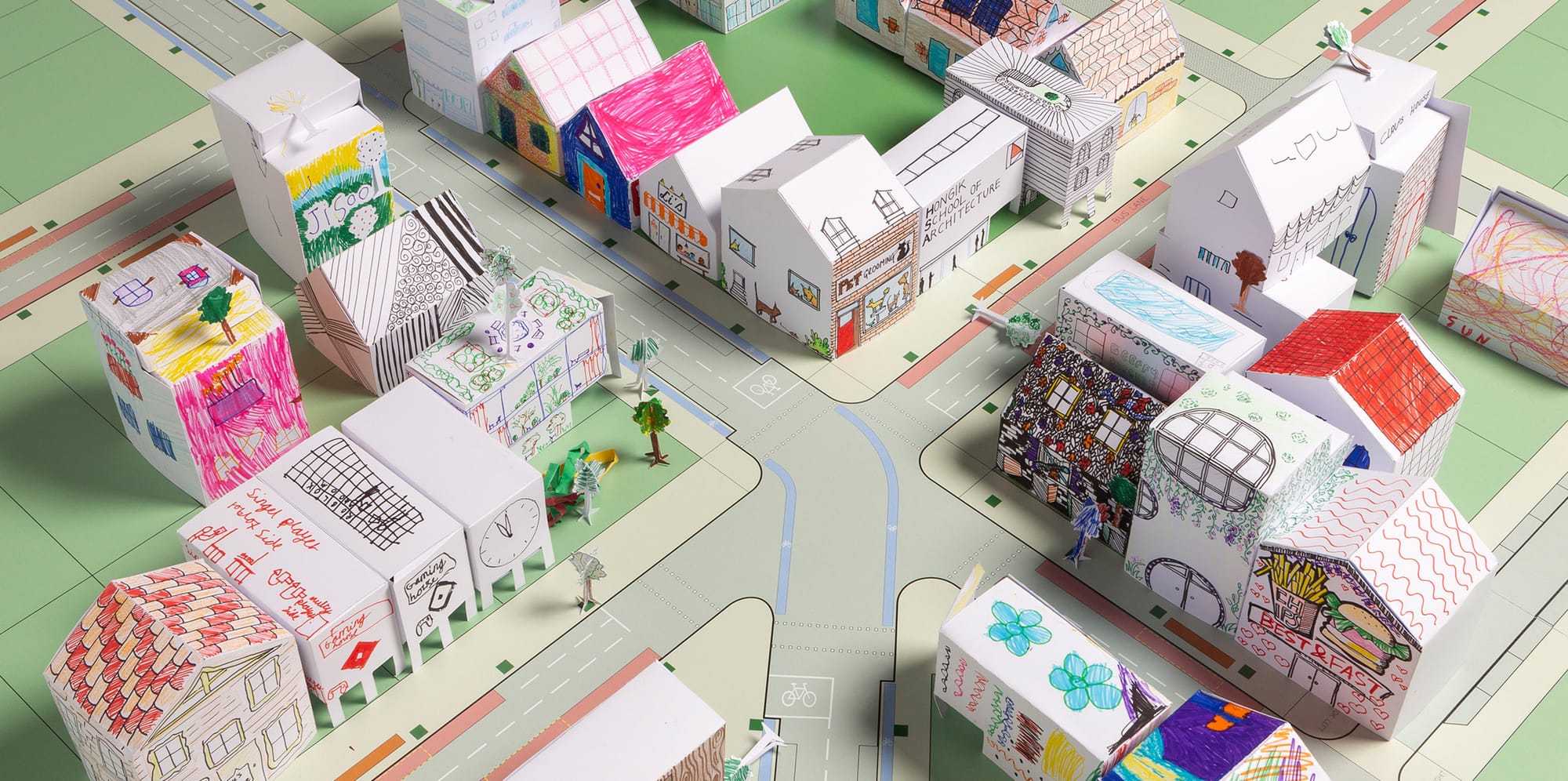
Children's imagination of the city is different from that of adults.
The child's experience of the city environment is fundamentally different from that of adults. Architectural and urban planning issues such as importance, necessities, qualities, values, priorities, functions, forms, densities, and attractions are largely the result of adult perspectives, findings, and decisions. They reflect what adults consider important, what they think, feel, imagine, decide, and believe.
This condition exists because, throughout history, children were rarely recognized as a distinct group with their own needs, realities, perceptions, and expectations. Since the emergence of modern architectural education and practice following the French Revolution, architecture and urban planning have primarily focused on adult needs and experiences. It is only during the last few decades that some cities have begun to provide limited urban components, facilities, and activities specifically intended for children. Even this modest level of consideration is far from universal and varies greatly in quality, accessibility, and capacity from one city to another. Beyond these limited interventions, most urban environments still lack a genuine reflection of children's needs and experiences.
When an adult walks through the city with a child, it is common to hear comments such as: "Look, Kim, that is a beautiful building," "See those nice colors," or "This is a lovely place; let's sit here and enjoy ourselves." But does the child truly care about what the adult says, or does the child have his or her own realities, perceptions, feelings, and judgments about the surrounding environment?
What often happens is that children's feelings, evaluations, and expectations become shaped and assimilated into adult interpretations of the environment. Consequently, children's independent experiences of the city remain largely unrecognized, while adult perspectives continue to define what is considered valuable, attractive, meaningful, and desirable in urban spaces.
The result is a city that reflects adult realities and priorities, while children's realities remain largely absent from its architecture, planning principles, and spatial organization.