Children and Adults: Two Realities of Space Design and Space Life
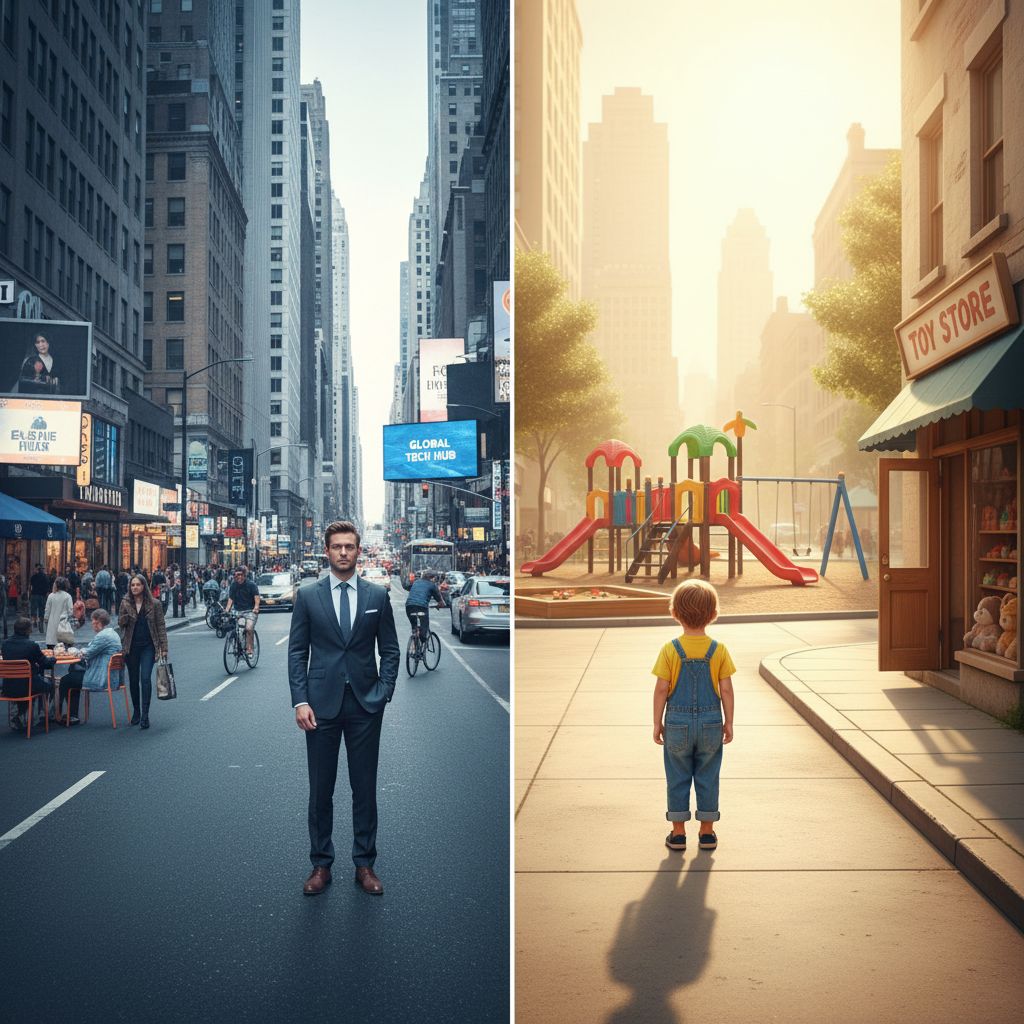
In our cities, adults live in a world of abundance, diverse spaces, endless design options, and freedom to shape how space is used, both privately and publicly.
Their spatial life is rich, flexible, and largely under their control.
Children, however, experience a very different reality.
Their spaces are limited, defined by specific locations, strict regulations, and narrow functions. Their spatial life is often confined to designated areas or forced to adapt to environments designed primarily for adults.
This is not just a difference; it is an imbalance rooted deep in our history.
So the question is:
What should we, states, institutions, architects, planners, and academia do about it?
We must begin by recognizing children as full citizens of the city, not future ones. This means moving beyond designing for children, toward designing with them.
If adults truly shape space design and space life, then we also carry the responsibility to rebalance it.
Because when we limit children’s space, we continue with the historical mistake.