Children and Adults Architecture Think Balance
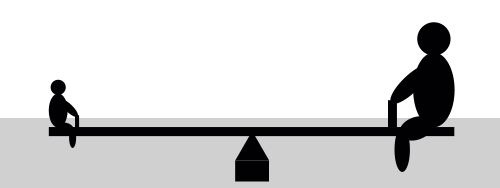
Children and Adults Architecture Think Balance
The word “child” has historically been used as an insult, equated with foolishness, irrationality, and lack of competence. This cultural bias inherited from ancient traditions and reproduced in modern societies has shaped how architecture and cities are designed.
Although international law defines childhood as a legal category, social and psychological development is continuous, and difference in cognitive maturity does not imply absence of intelligence, perception, or spatial understanding.
According to the United Nations Convention on the Rights of the Child, a person is considered a child until the age of 18. However, legal systems around the world fragment adulthood into multiple age thresholds, producing inconsistent definitions of responsibility, autonomy, and competence.
This variation does not reflect a clear understanding of childhood, but rather the uncertainty of adult societies about when a human being becomes “fully human” in social and political terms. The child is treated not as a present subject, but as a temporary, incomplete condition and this conceptual confusion is reproduced in architecture and urban design.
Architecture has not merely reflected this confusion about childhood; it has actively reinforced it. For centuries, children have been treated as incomplete humans whose presence in the city is temporary, disruptive, or secondary to adult life. As a result, city has been designed almost exclusively around adult bodies, speeds, scales, and priorities. The children are pushed in the resulted city architecture.
To rethink architecture is therefore to rethink the city as a shared environment for all ages not a city that tolerates children, but one that recognizes them as full urban subjects. Designing for children is not about some components but redesigning the logic of city functions, structures, space, behaviour, meanings, influences, values, health, growing, learning, movement, safety, scale, and participation.
This can only be achieved when all components of the city are designed in balance