The absence of children’s architecture in contemporary cities is tied to modern urbanism
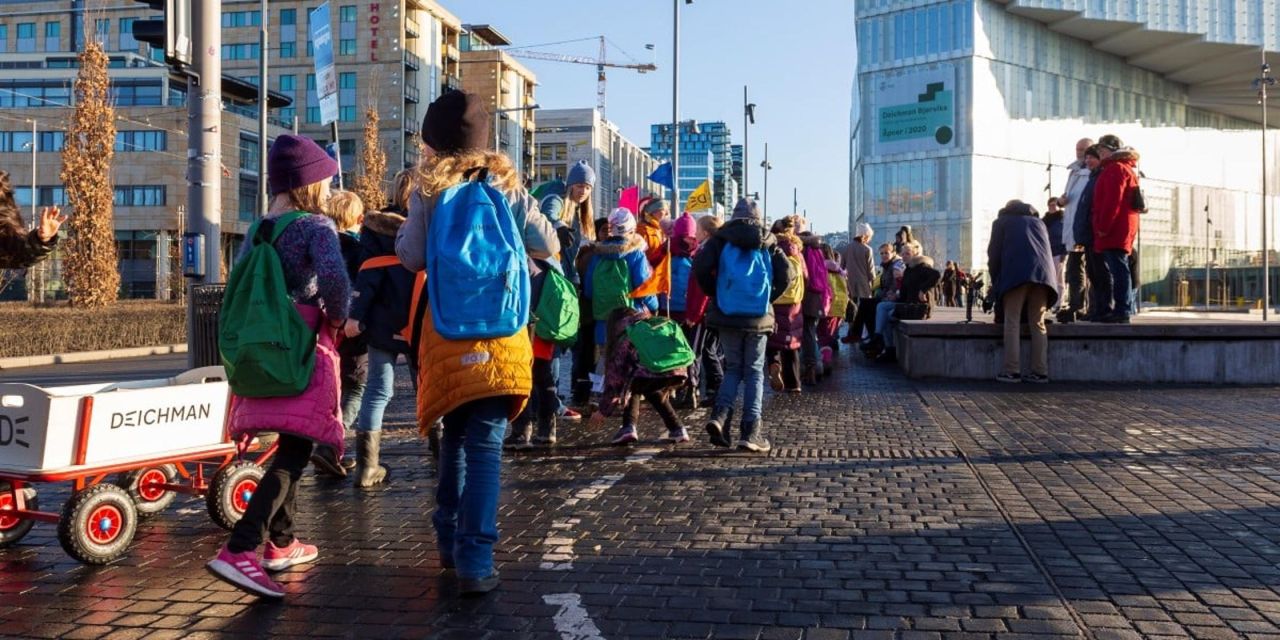
Oslo is the small capital city of Norway, with a population of nearly half a million, while the greater Oslo area is home to about one million residents. The city shares many urban characteristics with other Scandinavian capitals, including a focus on livability, walkability, and integrated public spaces. Oslo actively considers children at decision-making levels, reflected in buildings, spaces, and programs developed for children and youth. Yet, despite these efforts, there is still no true children’s architecture.
It is easy to explain that a room can accommodate many activities, but without intentional design, it remains merely multifunctional. Architecture for a particular group must respond to their needs, identity, and ways of inhabiting space.
Society of Oslo, like any other city, is multi-structured, and children are an essential part. Architecture and the city itself must recognize multiple architectures, each responding to different users, rather than imposing a single spatial logic shaped primarily by adults.
The absence of children’s architecture in contemporary cities is tied to modern urbanism, which prioritized efficiency, zoning, and a “universal user,” implicitly an able-bodied adult. Children are inculcated in decisions and receive good attention, but in architecture are marginalized, confined to playgrounds, centers, or schools, rather than integrated into the urban fabric.
Contemporary urbanism in any other city often reproduces this, addressing children through programs rather than spatial concepts. This gap reflects not a lack of intention, but a lack of architectural knowledge and theory capable of translating children’s ways of inhabiting the city into meaningful form.