MODERN ARCHITECTURE WAS BORN HANDICAPPED
The French Revolution of 1789 challenged centuries of architecture shaped by royal power and wealth.
Architects began searching for a new purpose: How can architecture serve society and improve ordinary people’s lives?
It took almost a century of experimentation, education, and new theories to establish modern architectural thinking.
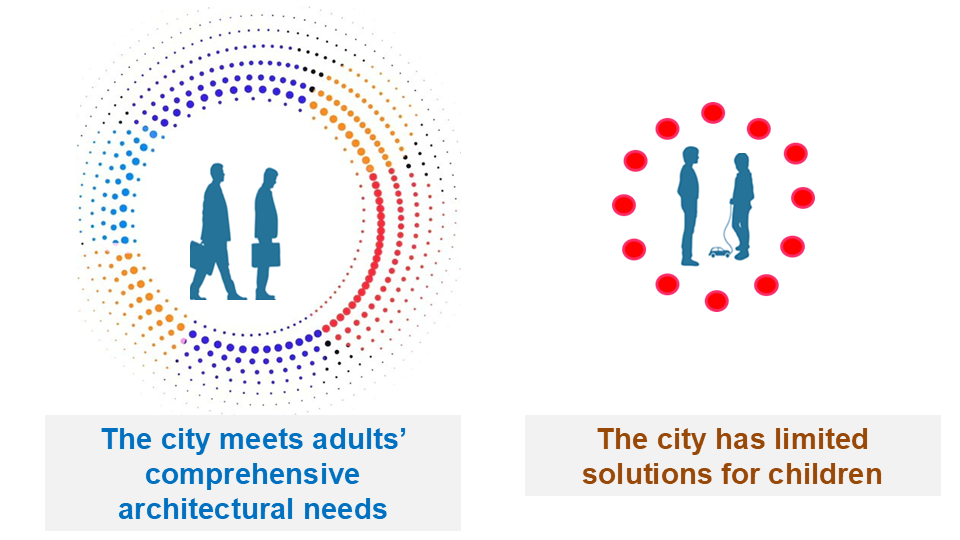
“Form follows function” became one of the powerful principles of this transformation. Yet one fundamental assumption remained unchanged. Architecture continued to be developed by adults, for adults, and through an adult understanding of society.
Modern architecture challenged the architecture of power, but failed to challenge the adult-centred foundation of architecture itself.
Thousands of years of architecture had already been predominantly adult architecture.
Now it is time to question this. Children must be considered through a holistic perspective, not as an addition to architecture, but as equal users of architecture and the city.
Perhaps the next architectural revolution is not about changing form. It is about changing who architecture is fundamentally for.
Think beyond Child-Friendly City because it is not the answer. Think Child City.