Compact Playgrounds Should Not Be Designed to Maximize Real Estate Investment Profit
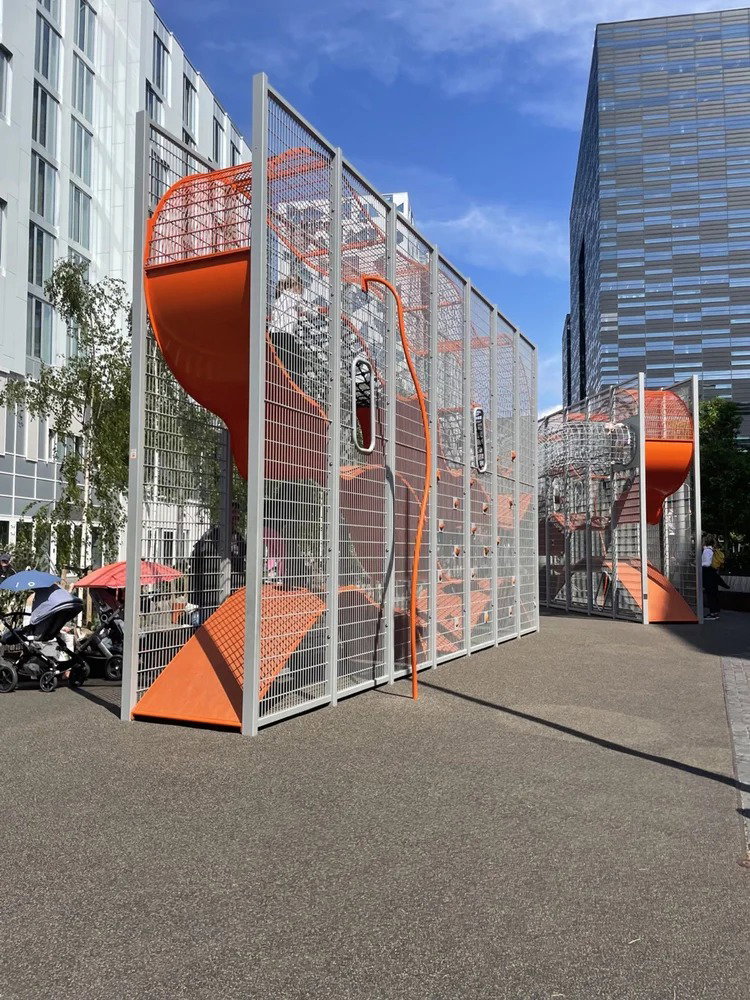
Compact urban spaces and compact playgrounds are increasingly justified through concepts such as livability and humanization in urban design. While these terms sound positive and progressive, they often legitimize planning strategies that carry critical social consequences.
One of the most influential of these strategies is land-use intensification, reflected in increased built-up areas, reduced apartment sizes, taller buildings, and shrinking outdoor spaces.
These trends directly affect children’s outdoor environments, particularly playgrounds. Compact playgrounds have emerged as one response to spatial constraints and are often presented as “good” and “child-friendly” alternatives. A common justification is that children like these compact solutions and appear happy using them. However, this argument is deeply problematic.
Children like to play just as they eat the food provided by their parents, whether it is healthy or unhealthy. Their acceptance does not mean the provision is appropriate or beneficial. They will play with almost anything. Even in the absence of a designated playground, children find ways to play and may appear happy doing so. But this adaptability should not be used by adults to justify planning policies, architectural guidelines, and urban design codes that may have negative long-term consequences for children’s development, well-being, and rights to space.
The fact that children can play in constrained environments does not mean such environments are adequate, healthy, or just. Claims that compact playgrounds are “good enough” must be critically examined through systematic research and analysis. This evaluation should consider multiple dimensions, including physical development, social interaction, creativity, risk-taking, inclusivity, access to nature, and long-term impacts on children’s well-being.
Only through such critical assessment can we develop more responsible guidelines for the design of children’s playgrounds and outdoor spaces. Rather than adapting children to shrinking cities, urban design should adapt cities to the developmental and social needs of children.